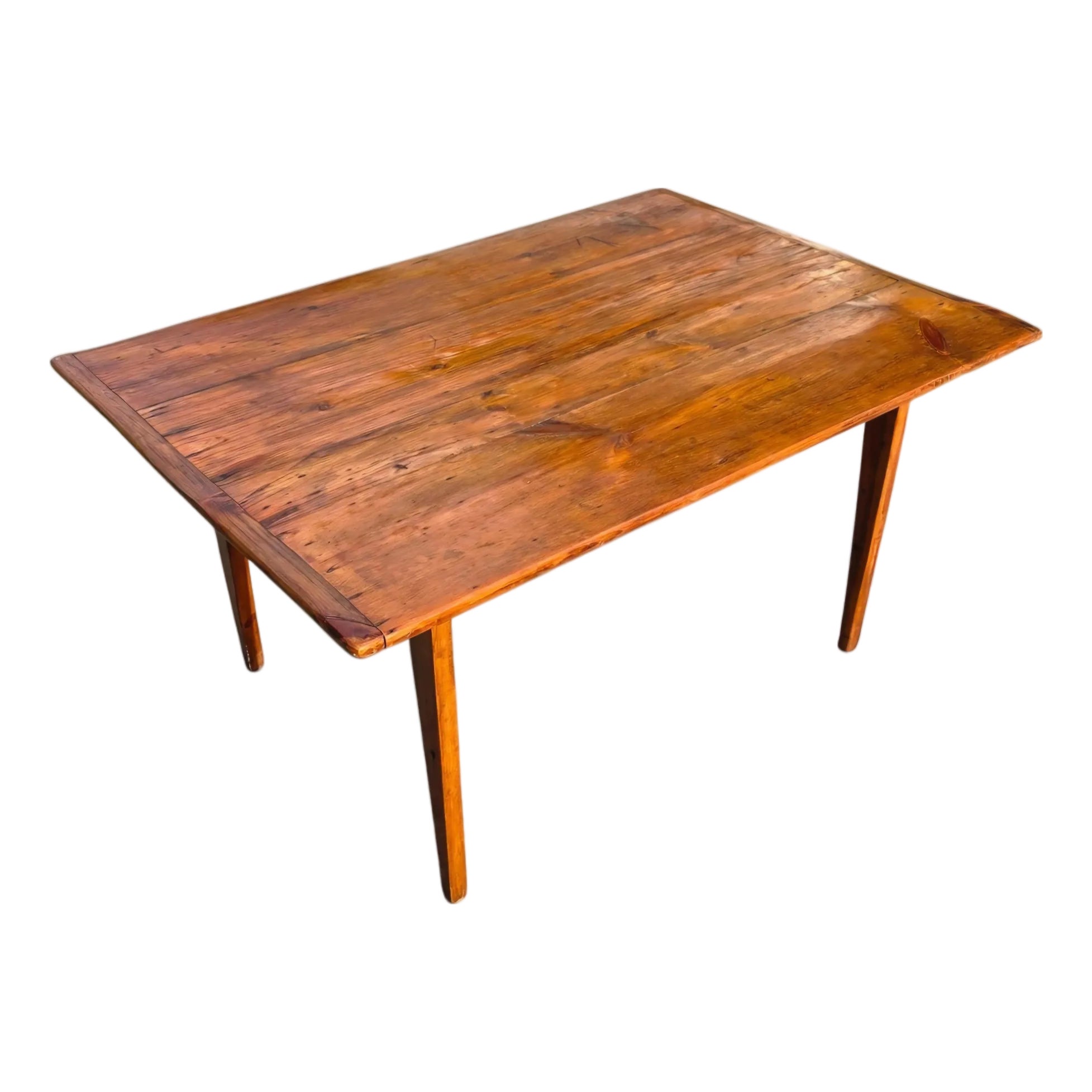
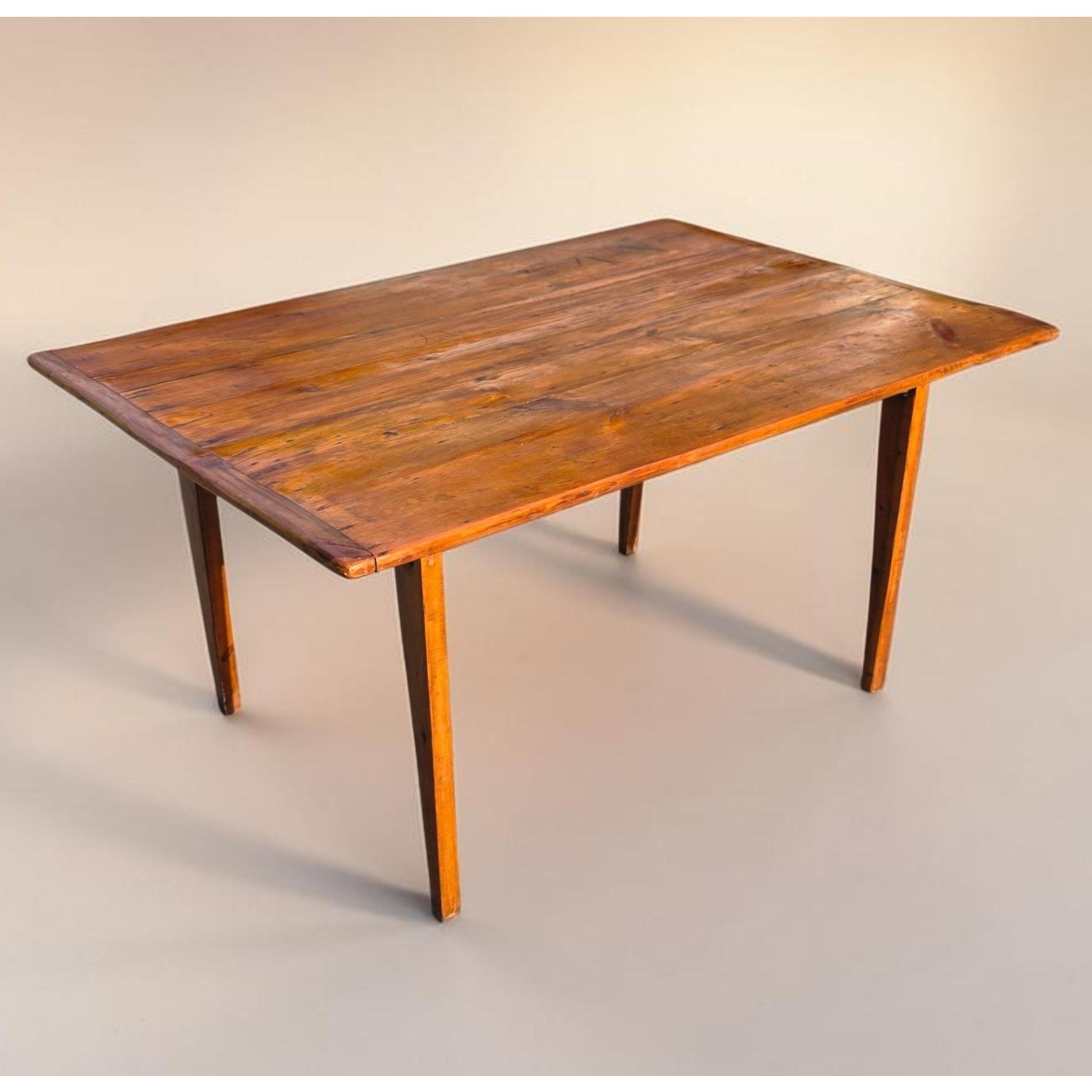
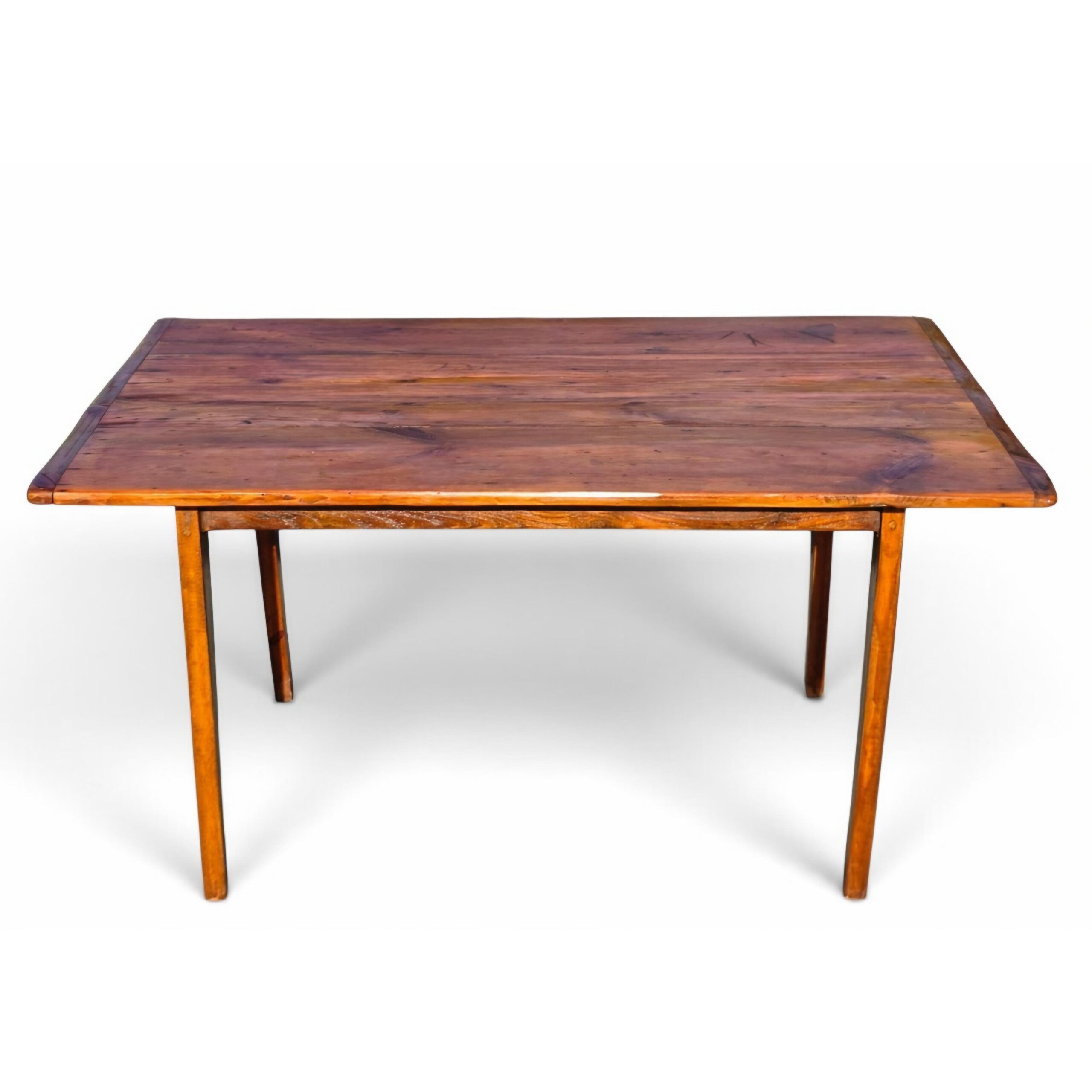
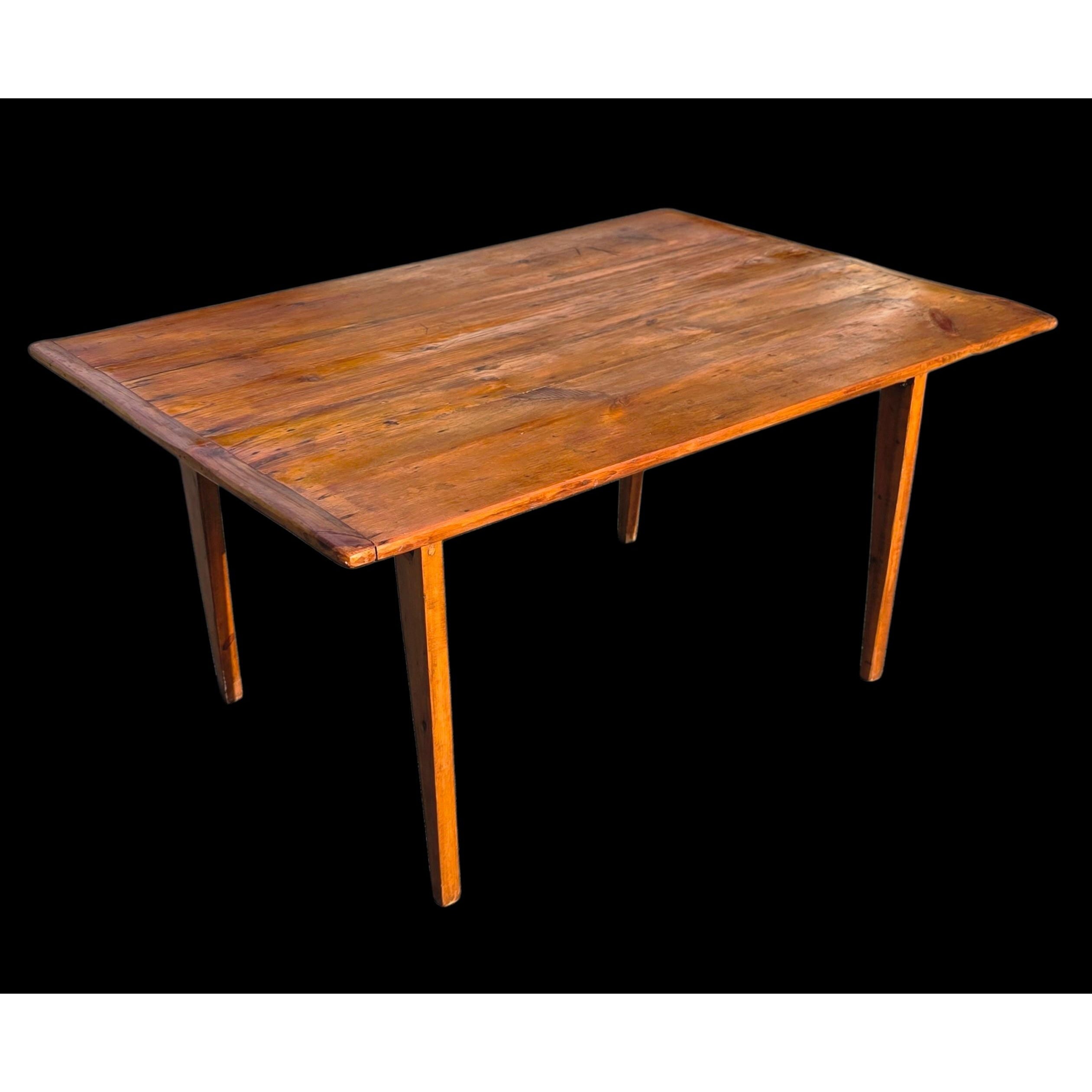
A rare and exceptionally characterful early American vernacular farmhouse dining table, dating to circa 1800, crafted in solid chestnut and distinguished by its substantial plank construction, hand-worked joinery, and extraordinary surface character.
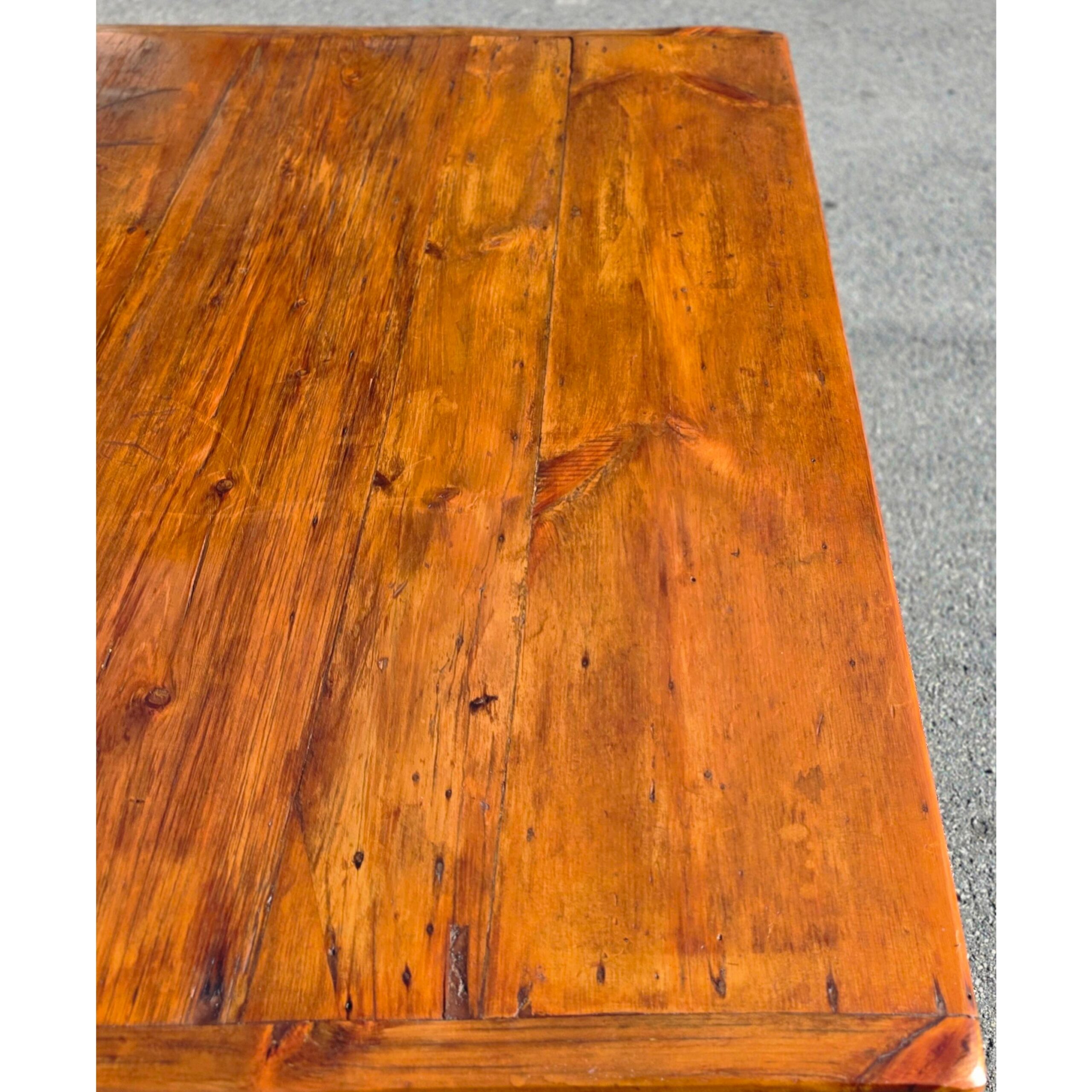
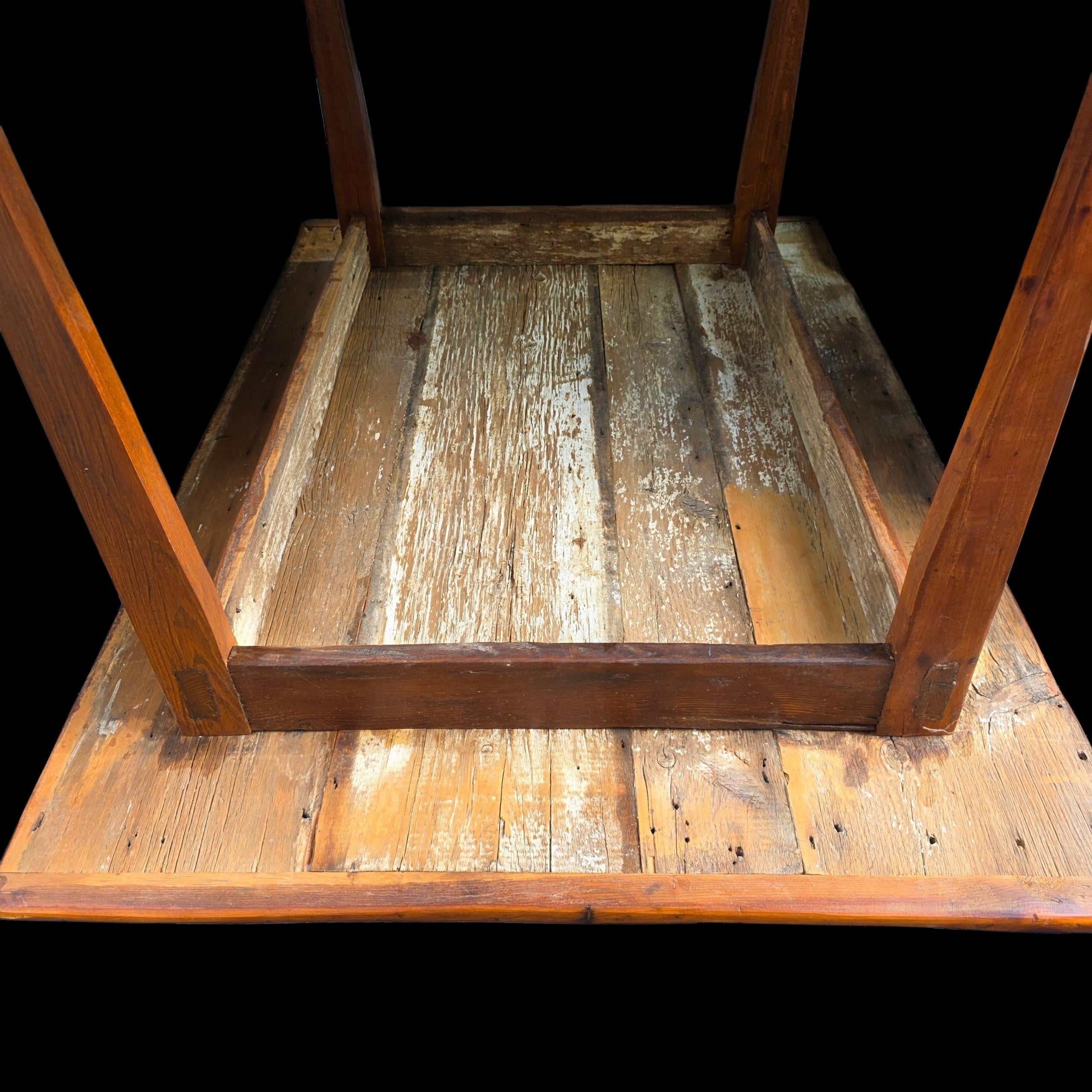
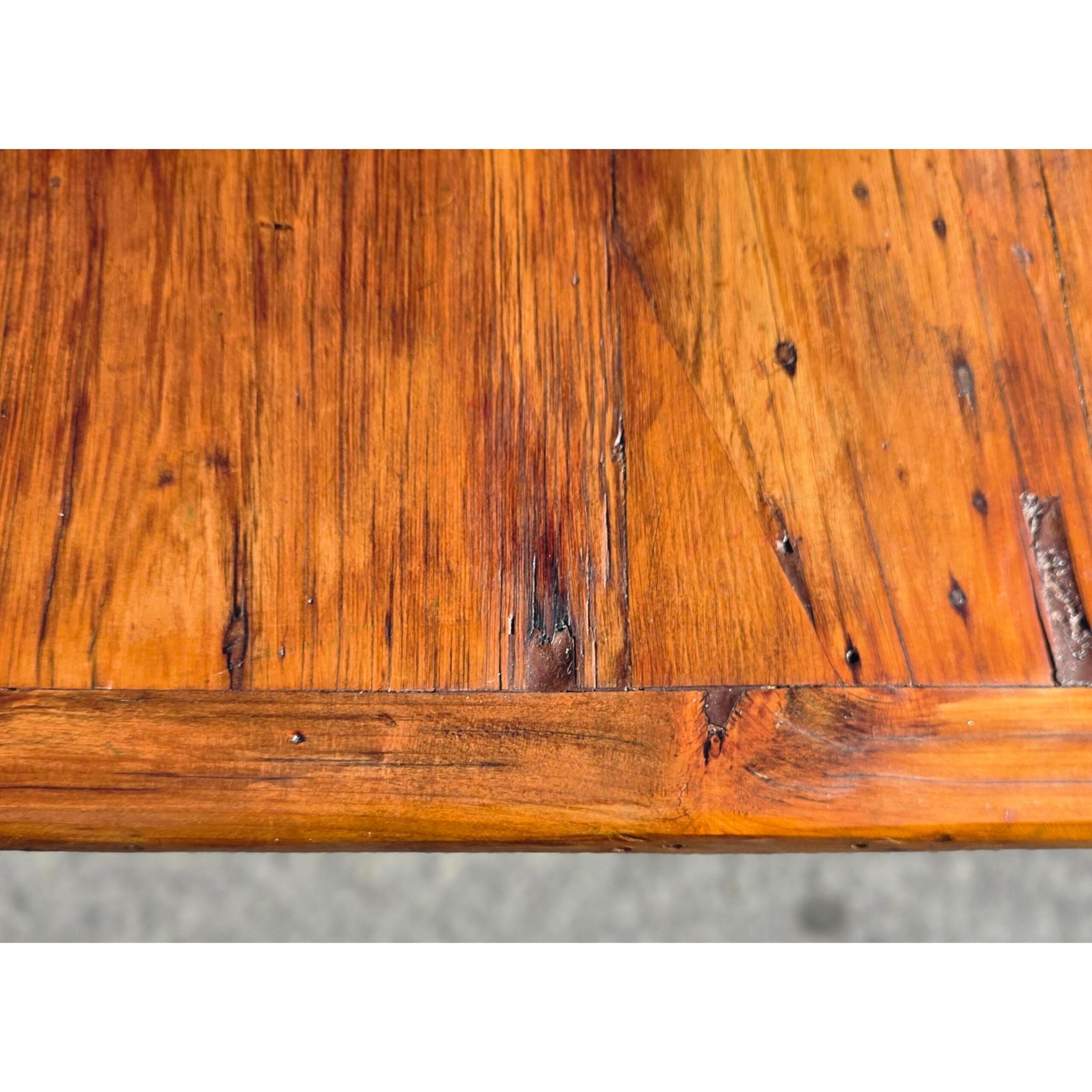
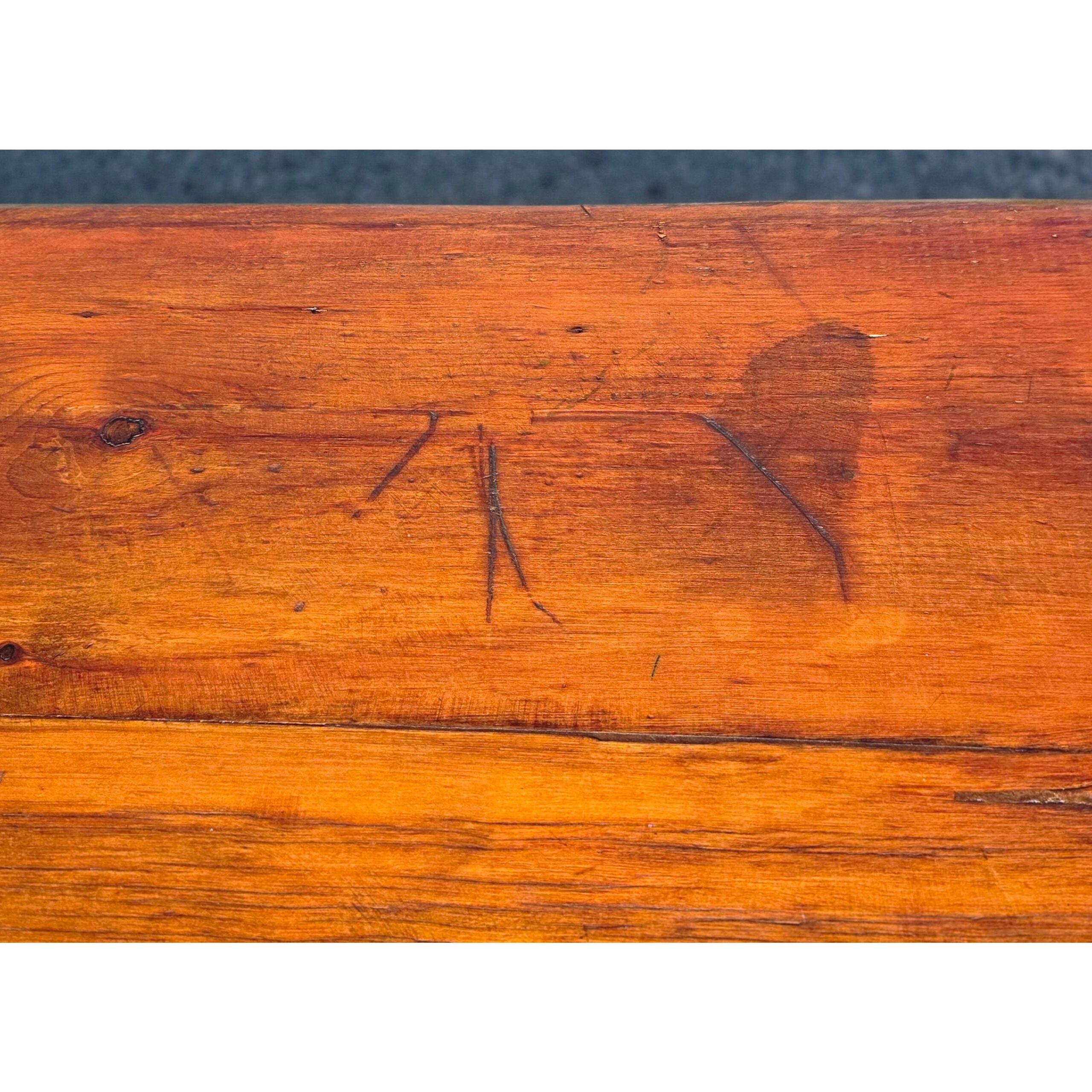
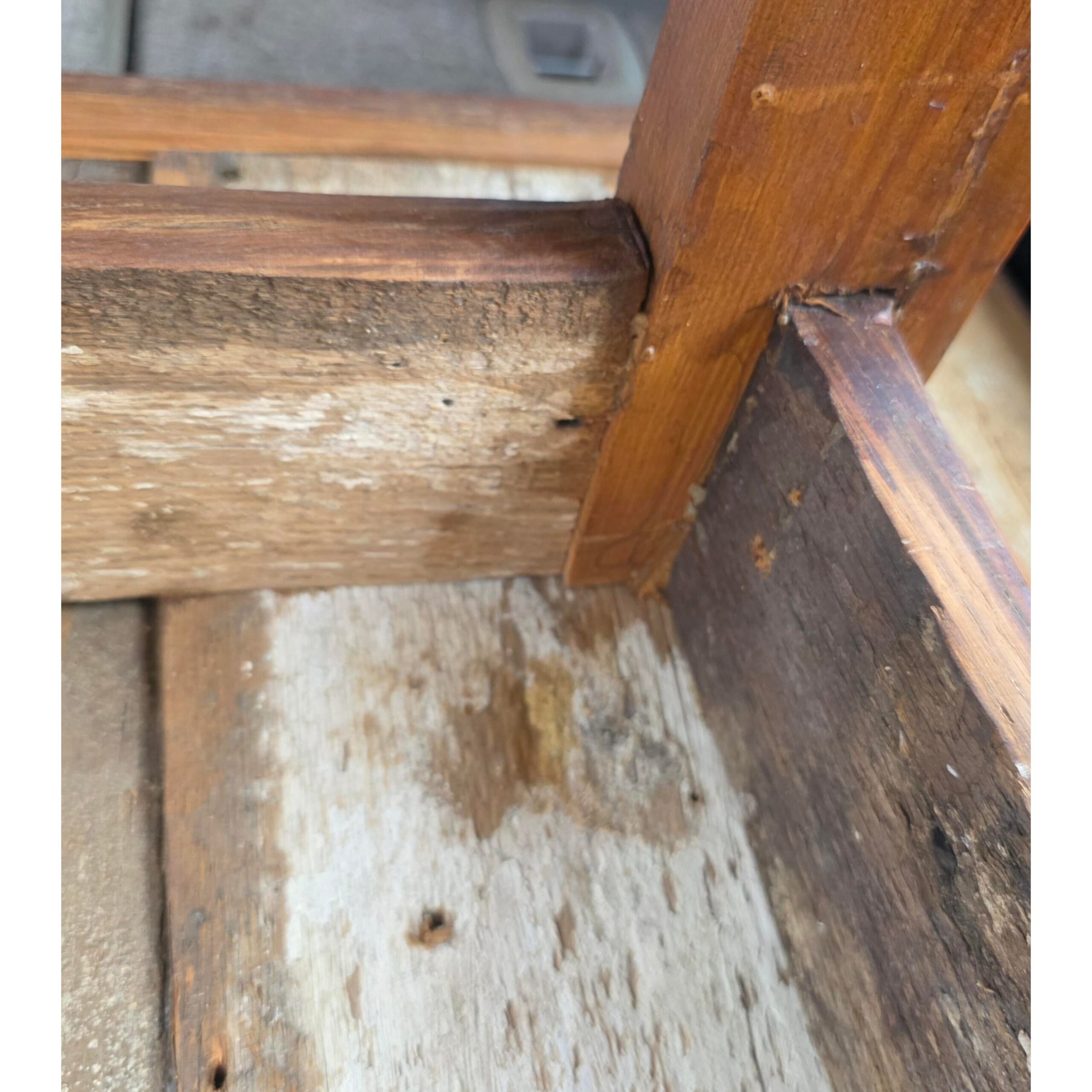
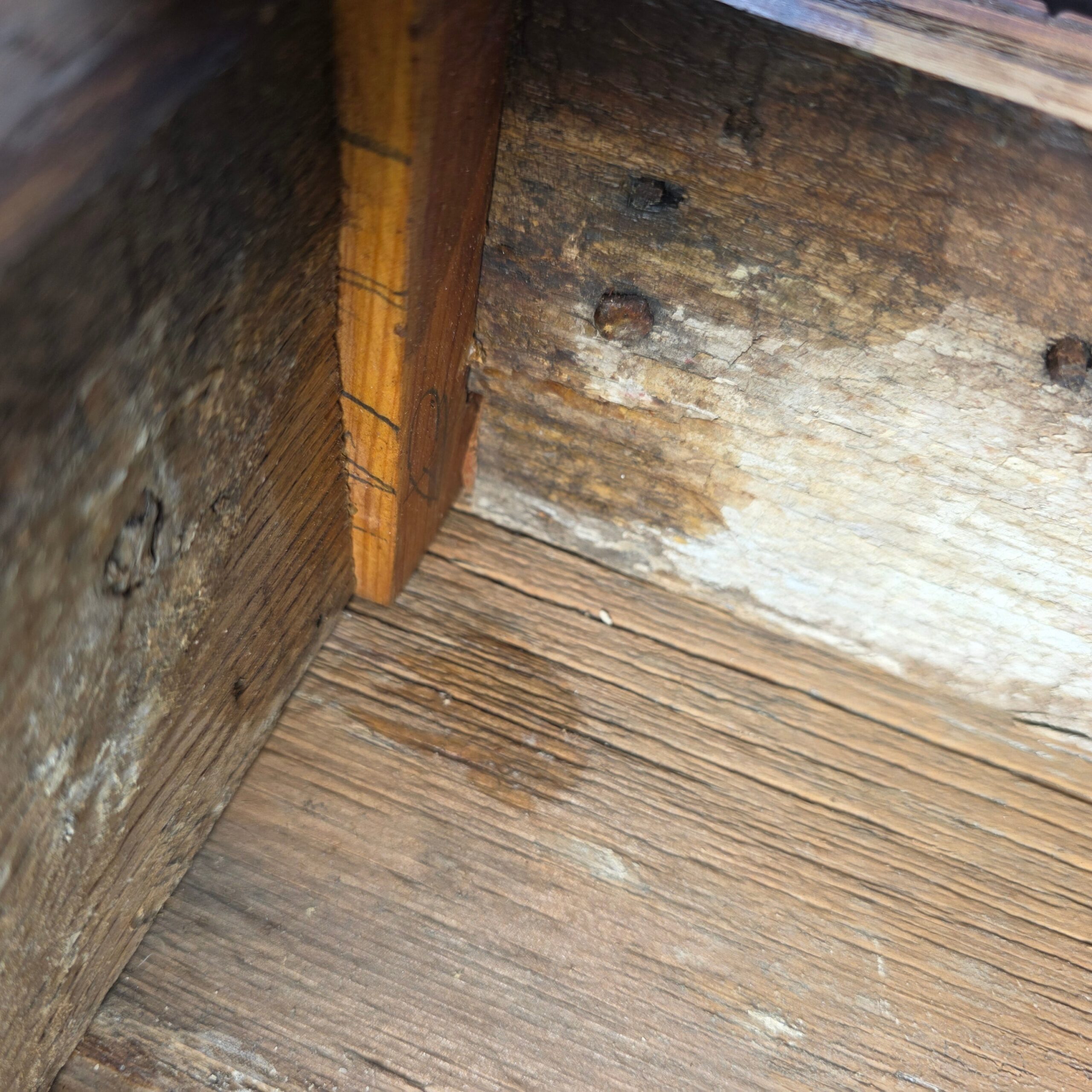
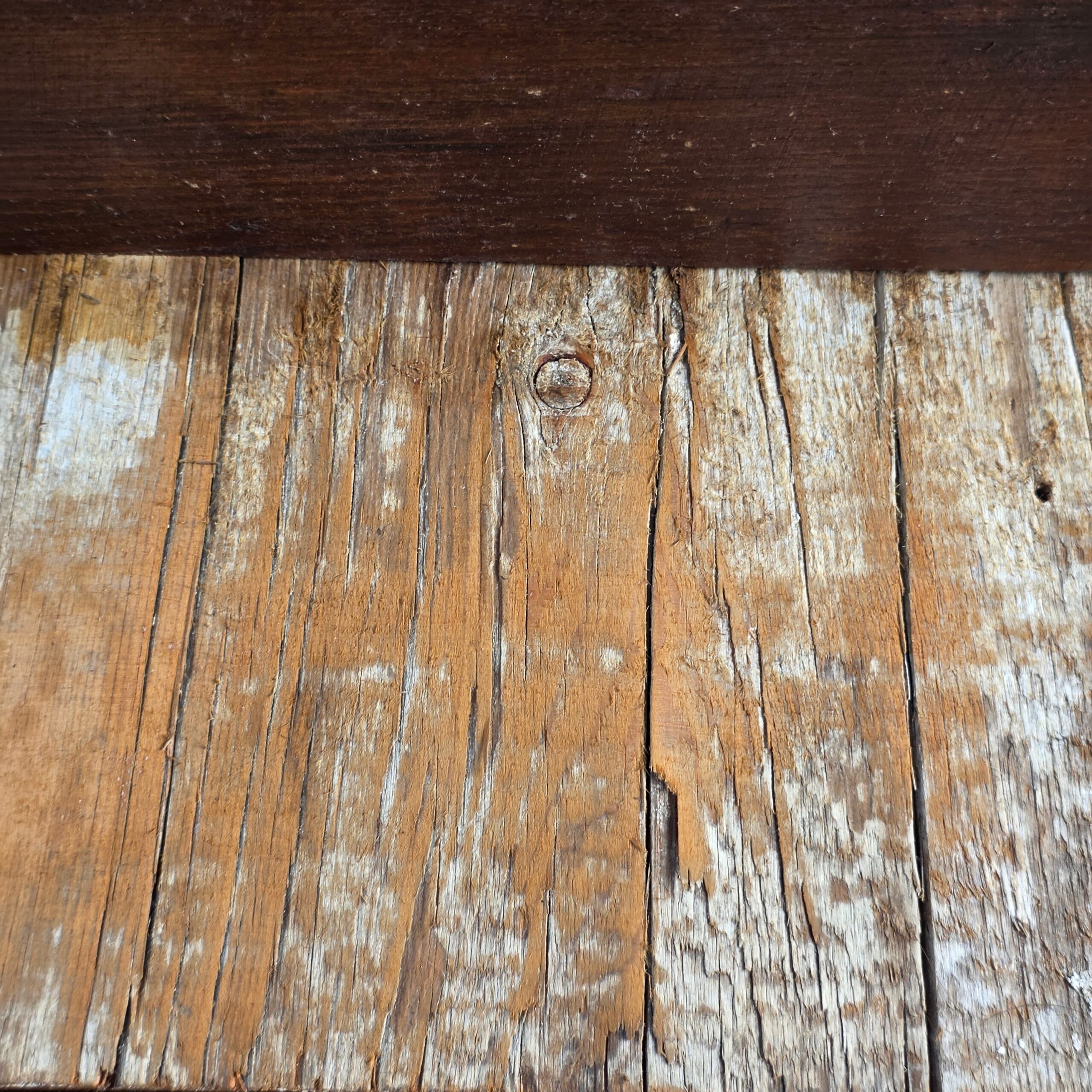
The generously proportioned rectangular top measures 60.75 inches wide by 42 inches deep and is constructed from wide, individually selected chestnut boards framed by a substantial molded perimeter. The richly figured surface displays pronounced natural grain, knots, shrinkage, checking, historic repairs, and accumulated patina developed over generations of use. The underside retains extensive remnants of an earlier white-painted finish, providing compelling evidence of the table’s long utilitarian history.
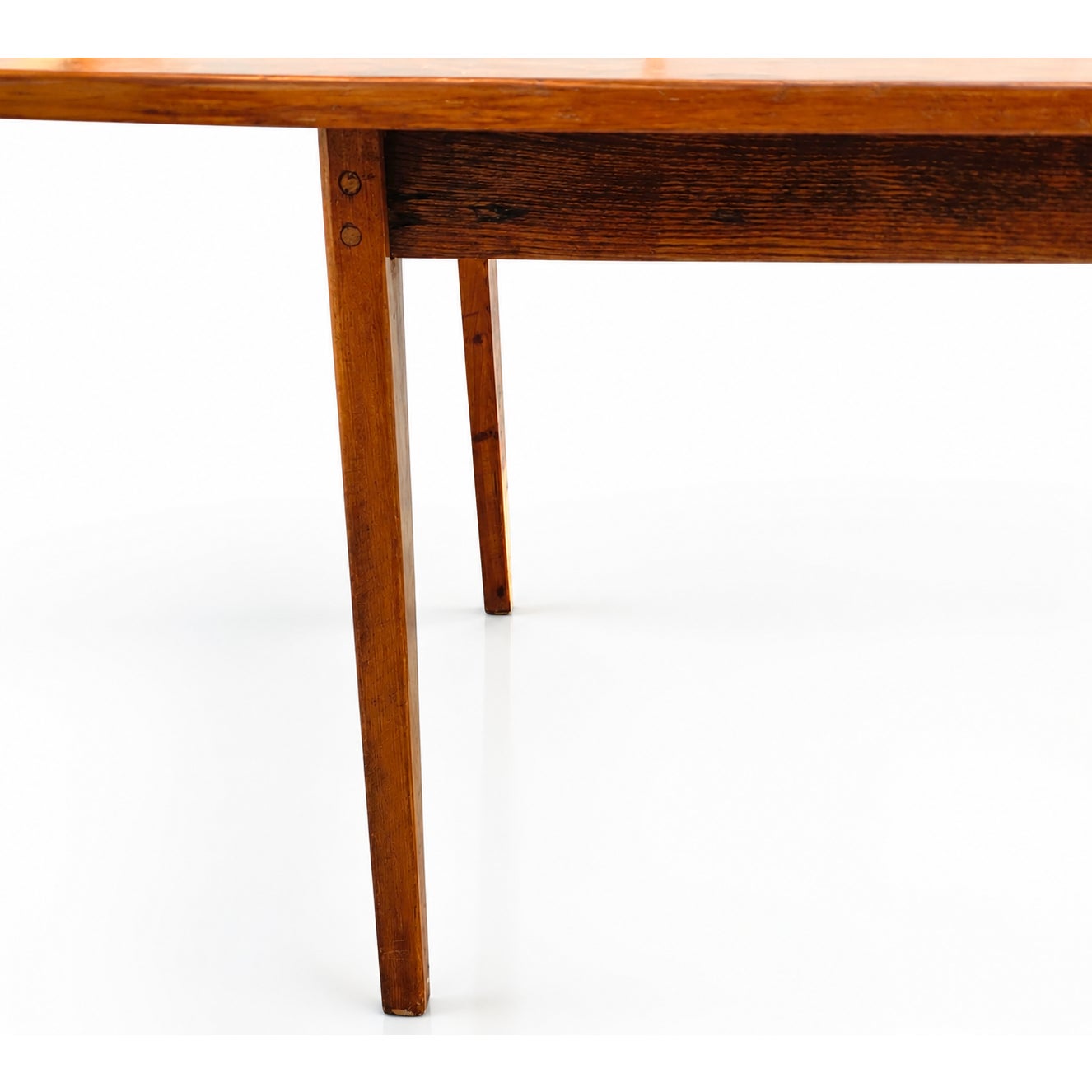
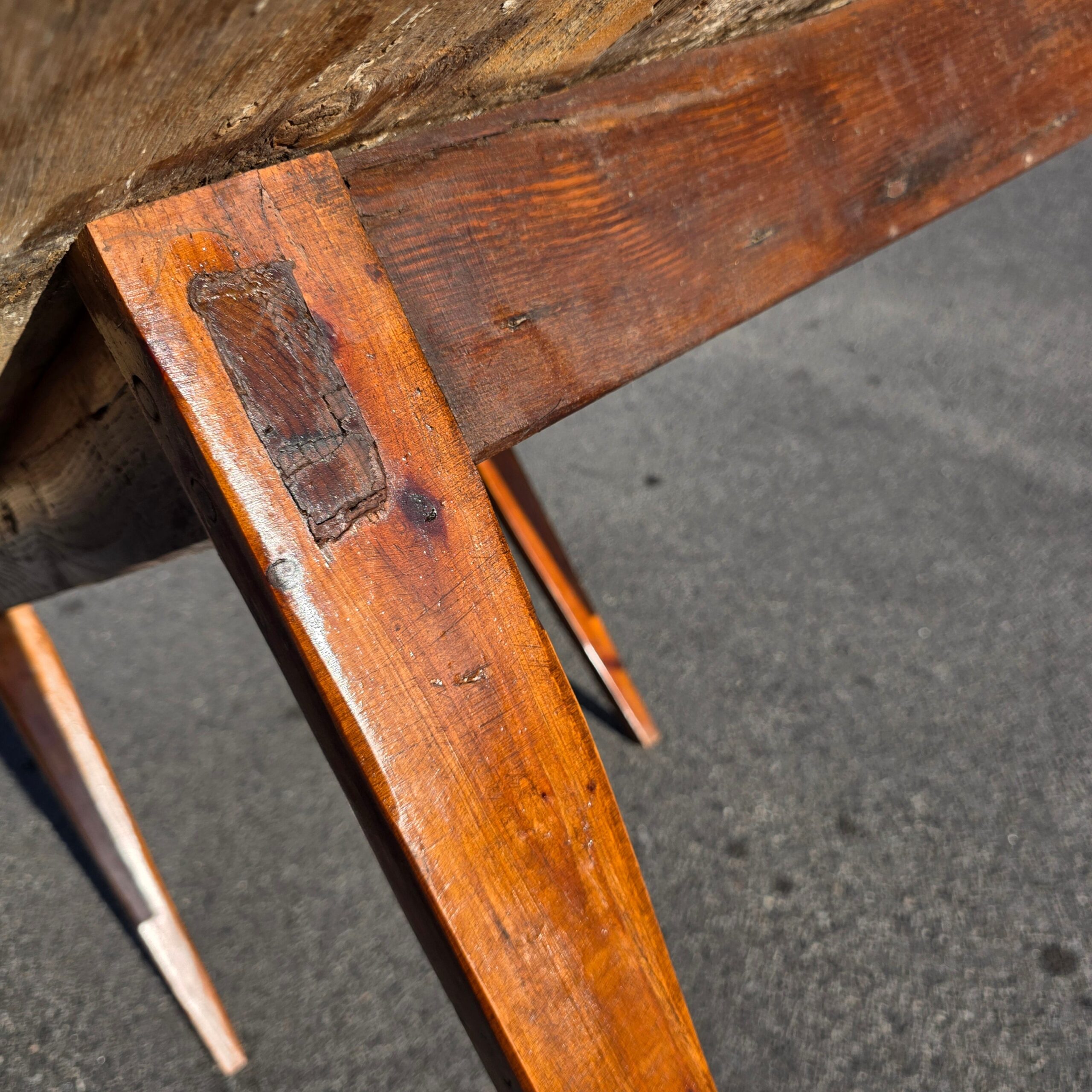
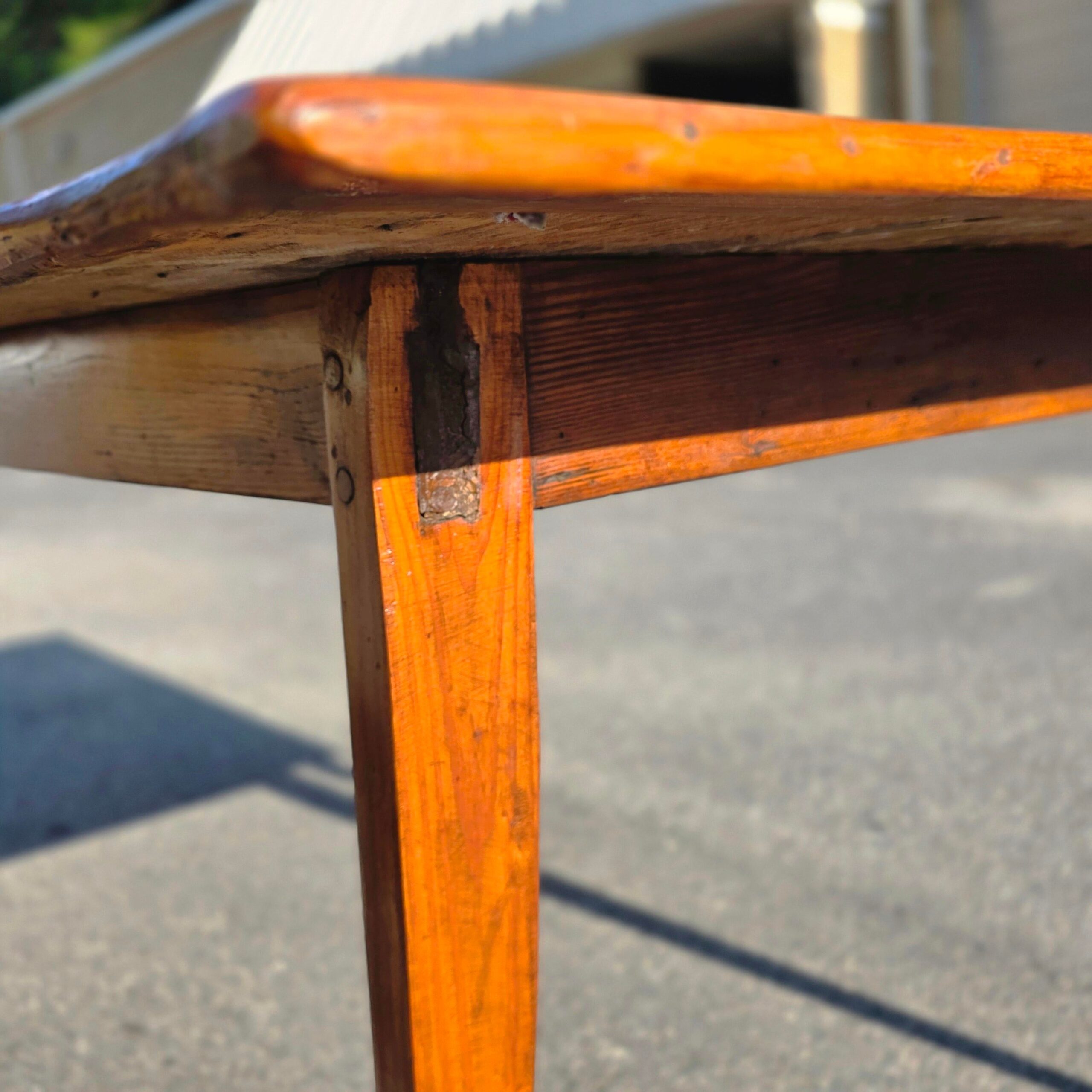
The table rests on four tapered square legs secured to the apron with traditional mortise-and-tenon construction and visible wooden pegging. The handmade construction, irregular board character, and extensive evidence of age are particularly evocative of early American rural furniture.
The warm honey-brown finish presents the chestnut’s natural character beautifully while retaining the desirable imperfections and abrasions associated with genuine age. With its unusually generous 42-inch depth and 29-inch knee clearance, the table is exceptionally versatile and well suited to both dining and contemporary interiors.
Dimensions
60.75ʺW × 42ʺD × 30ʺH
Styles
Early American
Farmhouse
Number of Table Leaves
0
Dining Table Base
Legs
Table Shape
Rectangle
Table Knee Clearance
29.0 in
Period
Early 19th Century
Country of Origin
United States
Item Type
Vintage, Antique or Pre-owned
Shop Sustainably with Chairish
Materials
Wood
Condition
Good Condition, Original Condition Unaltered, Some Imperfections
Color
Chestnut
Condition Notes
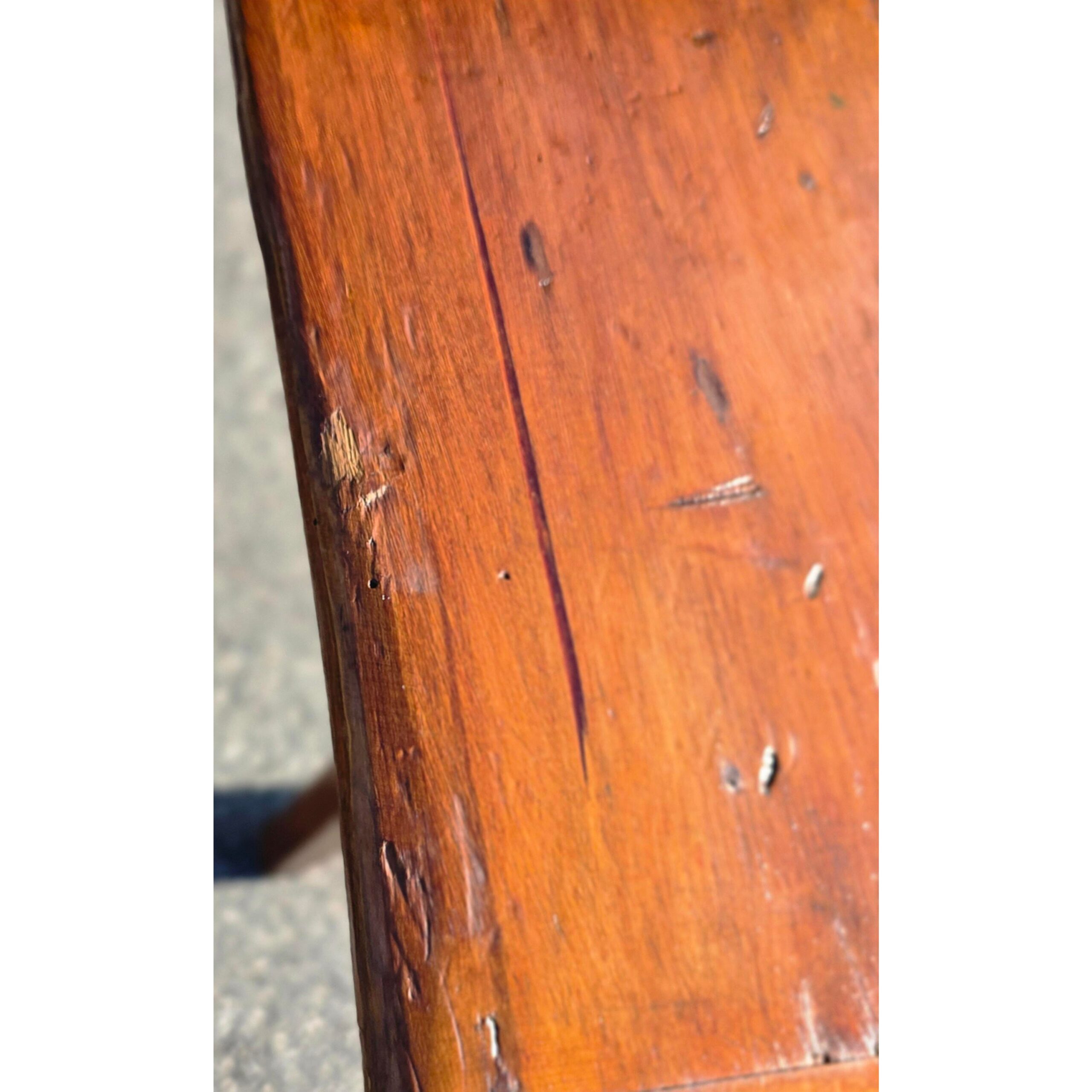
Good antique condition, with extensive age-appropriate wear and historic surface character consistent with an early American vernacular table of this period. The chestnut plank top exhibits numerous natural age cracks, shrinkage separations, knots, small losses, old nail and fastener holes, surface abrasions, scratches, dents, and areas of uneven coloration. The perimeter molding and corners show additional wear, edge abrasions, minor separations, and historic repairs. The underside retains substantial remnants of an earlier white-painted finish, with areas of paint loss, discoloration, oxidation, and accumulated age-related surface wear. The original hand-worked construction remains evident, including pegged mortise-and-tenon leg-to-apron joints. There are minor historic repairs and areas of wood loss around some joints and fastener locations. The table has been previously stripped and refinished, resulting in the warm honey-brown surface presently visible. The refinishing does not obscure the extensive natural age character of the original chestnut boards. Structurally sound and stable for normal use. All wear, imperfections, repairs, separations, and surface irregularities are considered integral to the table’s age, history, and primitive character. ***** One leg, although strong and stable, as a result of two-hundred plus years of use, leans in slightly but affect the functionality of the table in any way.